AV Technologies
Interior Lighting as Part of the Scene: LED Strips, DALI Control and DMX Integration
· 5 minute read
Well-planned lighting creates atmosphere and changes how a space is perceived. How LED strips, DALI management and DMX control come together in an integrated interior lighting system.
Architectural lighting · LED strips · DALI · DMX
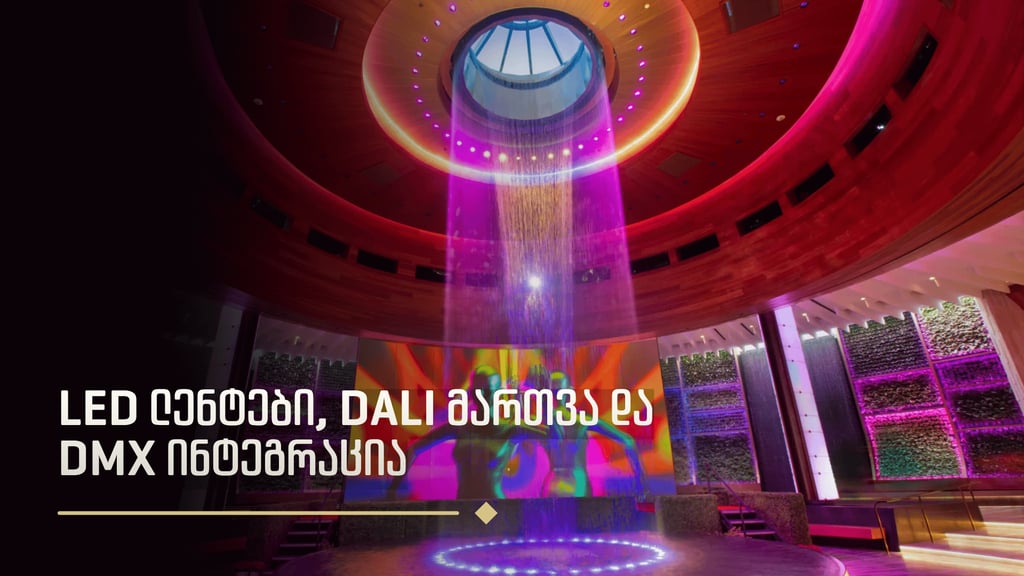
Lighting plays a much greater role in modern interiors. A properly planned lighting system creates atmosphere, changes how a space is perceived and gives each moment an appropriate character.
Hotels, restaurants, homes, retail premises and multifunctional venues are just some of the places where lighting can serve practical, decorative and emotional purposes at the same time. This is why combining LED strips, DALI lighting management and DMX control in one system is becoming increasingly relevant in modern projects.
LED strips: a flexible tool for interior design
LED strips are one of the most flexible interior lighting solutions. They can be used in ceiling contours, furniture, stairways, shelves, bar counters and many other architectural details.
Their main advantage is not simply their compact size. A correctly selected LED strip can create soft, unobtrusive illumination or accentuate important architectural features. For example, a hotel lobby's lighting scene might be brighter and more energetic in the morning, then warm and calm in the evening. In a restaurant, lighting intensity and colour temperature can change according to the time of day and how the space is being used.
Managing all this becomes particularly effective when LED lighting is integrated into a unified control system.
DALI: intelligent management of everyday lighting
DALI (Digital Addressable Lighting Interface) is a lighting control standard that allows compatible luminaires to be controlled individually or in groups and different lighting scenes to be created.
DALI is particularly practical in spaces that require:
- Adjusting lighting intensity;
- Independently controlling different zones;
- Creating predefined lighting scenes;
- Changing lighting according to the time of day;
- Using energy more efficiently;
- Centralised control.
For example, a hotel's shared spaces can have several scenes for daytime, evening or events. A single command changes lighting levels across different zones and prepares the space for a particular purpose.
DMX: when lighting becomes part of the scene
While DALI is primarily used to manage architectural and everyday lighting, DMX provides additional capabilities where lighting needs to fulfil a dynamic, visual role.
DMX can control colour, intensity and various lighting effects in compatible devices. This is particularly interesting for restaurants, hotels, event venues, clubs, showrooms and other premises where the visual character of a space changes periodically.
For example, a single space can have:
- Everyday mode: calm, warm and functional lighting;
- Evening mode: reduced intensity and more atmospheric lighting;
- Event mode: dynamic colours and accent lighting;
- Presentation mode: reduced general lighting with specific zones highlighted.
DALI + DMX: combining two systems in one space
Combining DALI and DMX is particularly effective when a project requires both stable, everyday lighting management and dynamic scenes. This approach separates the systems' functions while bringing them into a unified control logic.
For example:
- DALI manages the levels and zones of the main architectural lighting;
- An LED controller provides appropriate control of the LED strips;
- DMX manages dynamic lighting and coloured effects;
- A central control system brings these processes together and lets users activate scenes easily.
Correctly planned integration is especially important because simply connecting different systems is not enough. It is necessary to determine in advance which device controls what, how signals are transmitted and how each scene works.
What devices can form part of the system?
The system's composition can vary by project, but commonly includes:
- LED strips and suitable power supplies;
- LED controllers;
- DALI drivers;
- DALI controllers;
- DMX controllers;
- DMX decoders;
- A central control panel or touch interface;
- Wall buttons and scene-recall panels;
- Sensors;
- Appropriate gateways and interfaces for DALI and DMX integration.
The key is not the number of individual devices, but selecting them correctly and integrating them reliably with one another.
A lighting scene starts with planning
A good lighting system does not come from selecting technical devices alone. First, the space's function, design and user experience need to be understood. For example, restaurant lighting scenes can differ: lunch calls for a bright, natural environment; dinner for warmer, more intimate lighting; events for accent and dynamic lighting; and cleaning for maximum functional illumination.
A hotel may need different scenes for its lobby, restaurant, conference space, facade or outdoor areas. This is where technology and design intersect: the scene determines the system architecture, not the other way around.
Creating such a system requires not only selecting good products but planning the right technical solution. Fresnel is ready to help at different project stages, from defining lighting needs and choosing suitable devices to planning system integration and managing subsequent processes.
If you are planning to upgrade a space's lighting, design a new property or make an existing lighting system more flexible and manageable, an appropriate solution can be selected according to the requirements of the particular space.