Immersive Technologies
360° Video Projection and the New Standard of Immersive Experience
· 5-minute read
Human history has always been connected to space. 360° immersive projection is one of the most requested solutions for modern spaces — where the visuals extend across all walls, ceiling, and floor.
360° projection · Immersive experience · Video mapping · Fresnel
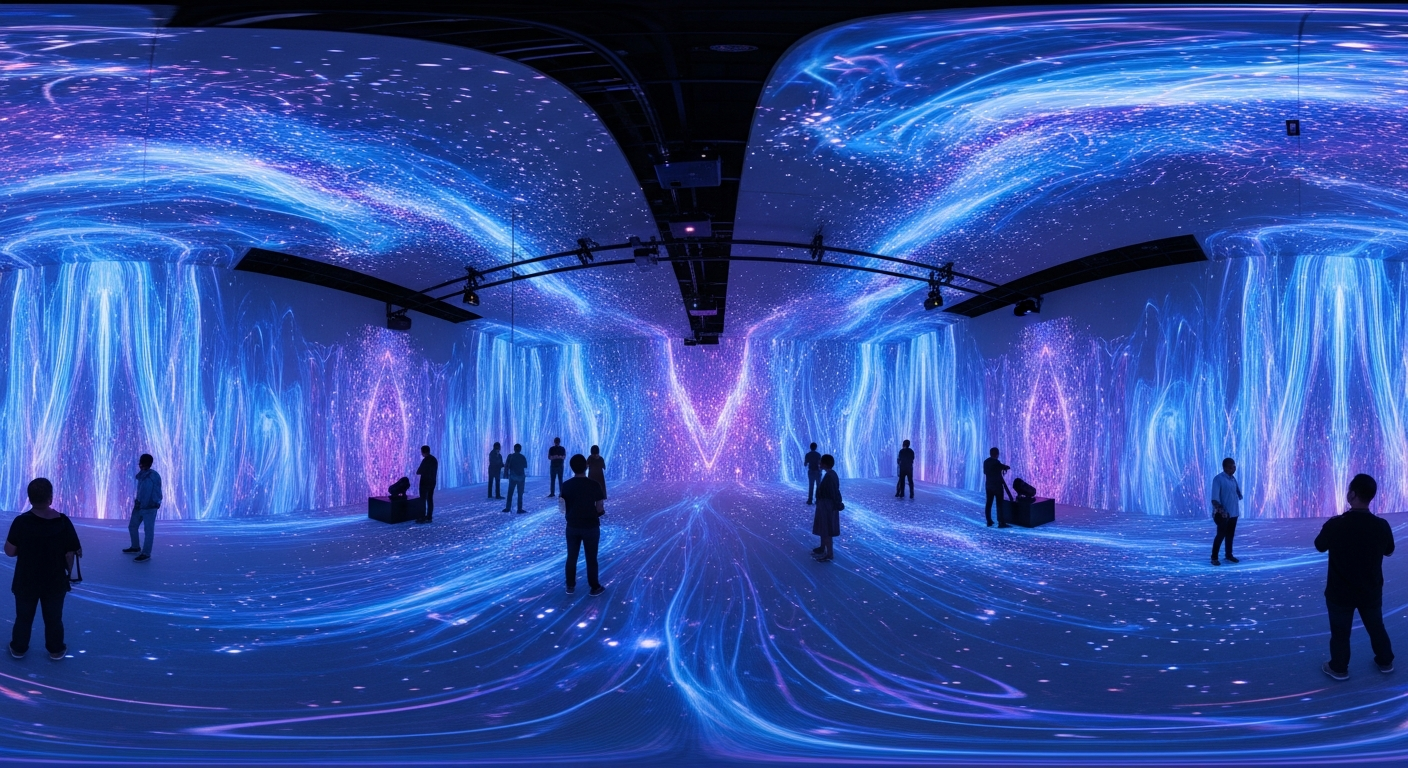
Human history has always been connected to space. From images painted on cave walls to modern architecture and digital screens, space has always been the frame where meaning and stories were formed. Today, this role is expanding even further. In this reality, a visual effect is no longer just a beautiful picture. People expect an experience that impacts them emotionally and tells a memorable story. That is why 360° video projection has become one of the most requested solutions for modern spaces.
What does 360° immersive projection mean?
In traditional projection, the image appears on one wall, and the viewer stands in front of it. In 360° immersive projection, this boundary disappears. The visuals extend:
- On walls
- On the ceiling
- On the floor
- On columns and architectural elements
The space comes to life entirely, and the viewer becomes part of the experience, which in itself means that they are no longer in the role of an observer, but rather moving inside the content.
When visual information surrounds us from all sides, a person concentrates more on one experience. The brain perceives the environment as a single whole, and attention is no longer scattered. As a result:
- The distance between the viewer and the content disappears
- Emotional engagement increases
- What is seen is remembered better
Why has video projection become so popular?
In recent years, spatial experiences have grown significantly in both cultural and commercial projects. The reason for this is simple:
- People want more engagement
- Brands want to stand out and build an emotional connection
- Spaces need refreshing without physical reconstruction
- Organizers need impressive effects and real results
Where does 360° immersive projection work best?
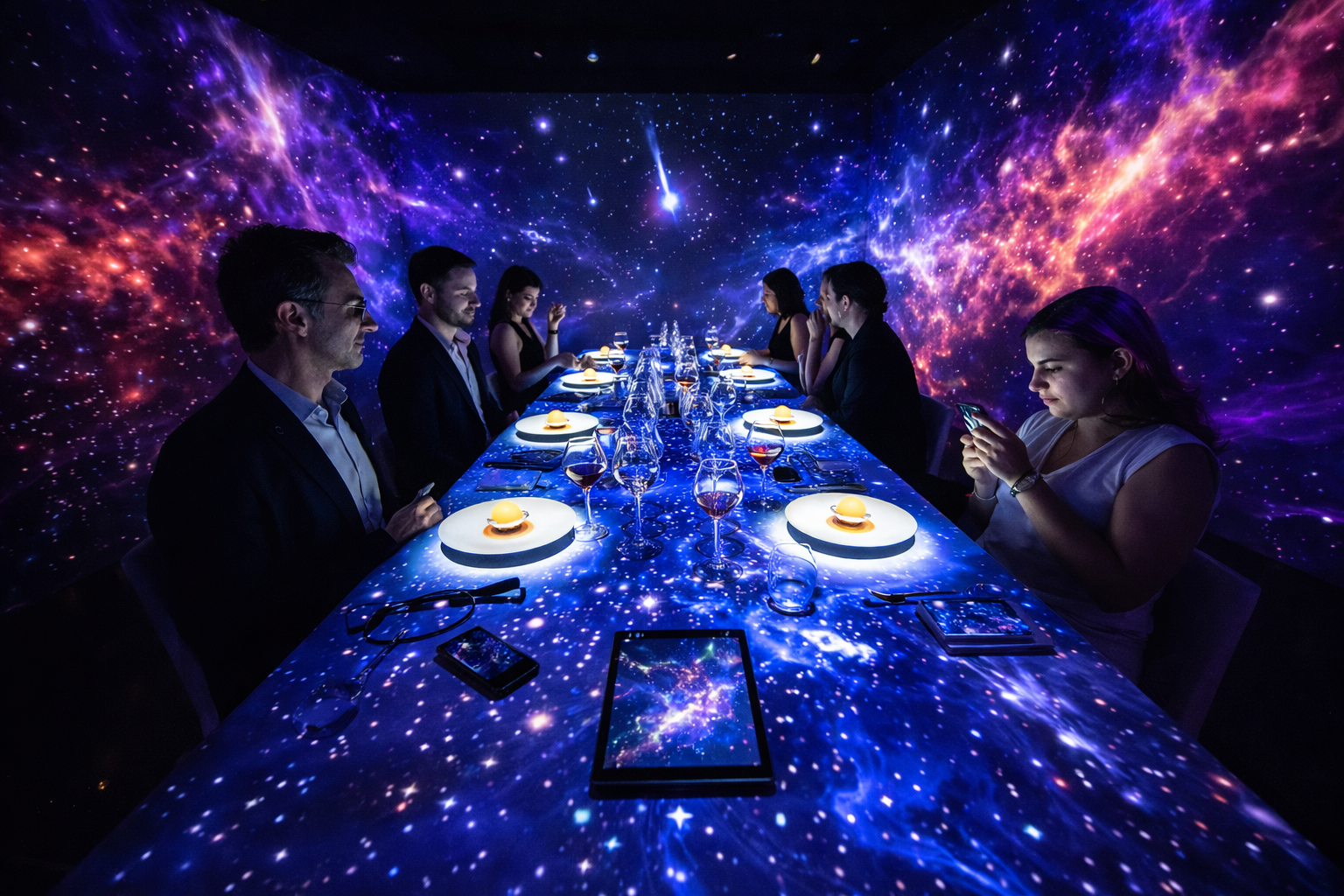
Hospitality and Entertainment:
Hotels, restaurants, and entertainment facilities use interactive projection to create a dynamic and memorable environment. Such a solution 'brings to life' the space - visuals react in real-time to the guest's movement and create an impressive atmosphere.
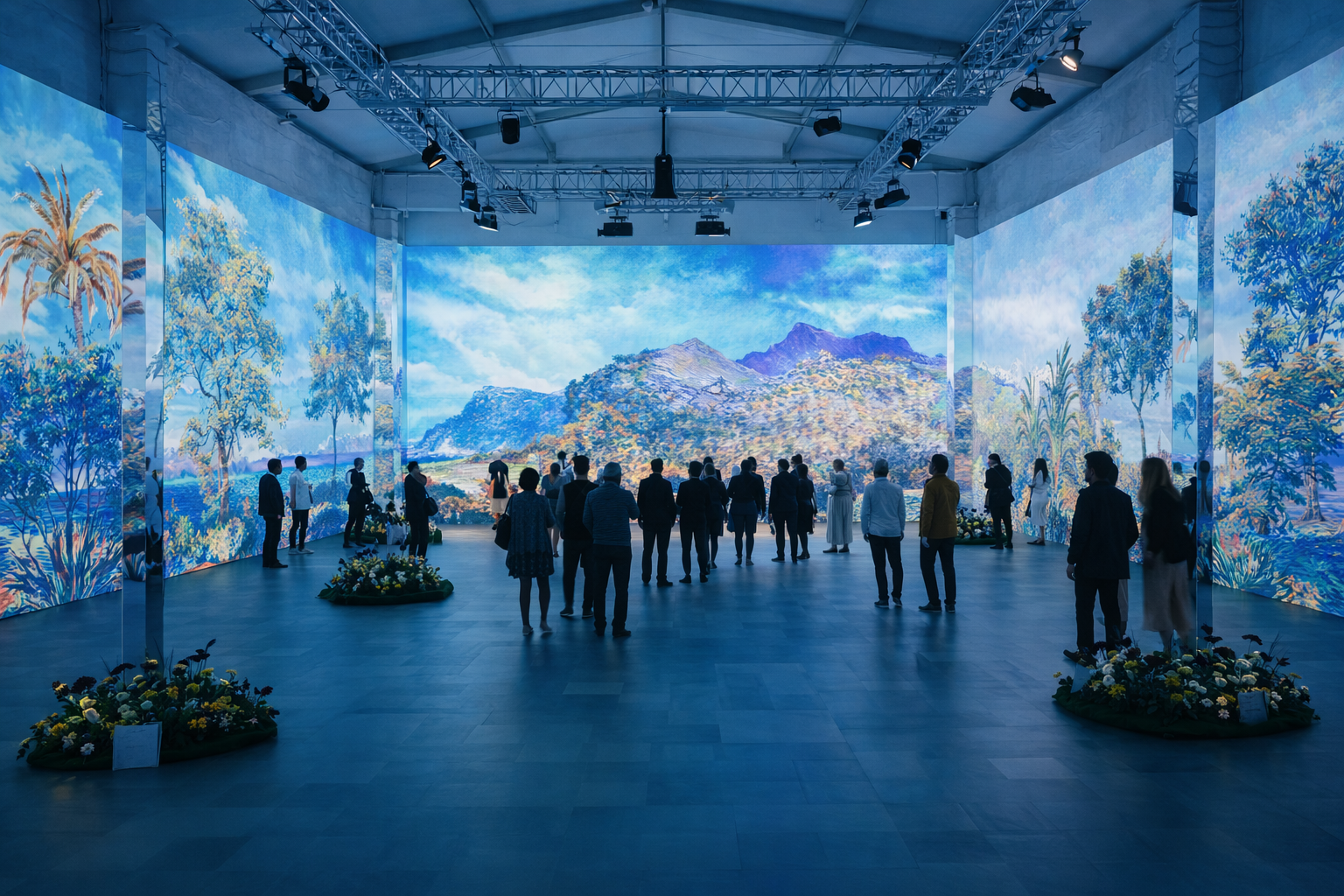
Museums and cultural spaces:
Immersive projection makes exhibits more alive, understandable, and memorable, especially when there is a need for visual reconstruction of history, the creation of thematic rooms, and the presentation of multilingual visual narratives.
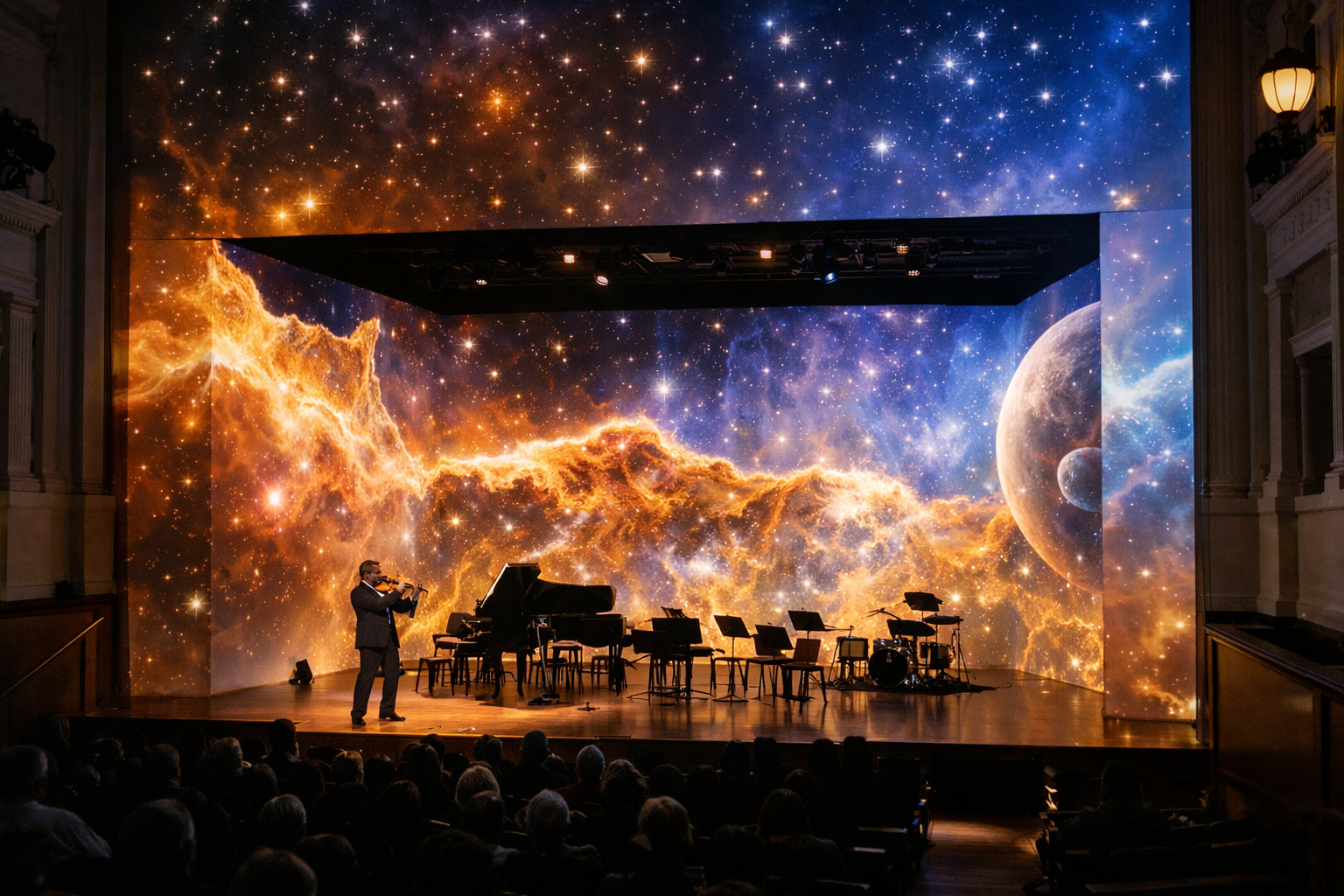
Theater and performing arts:
In modern scenography, video projection often becomes a central element of the stage. It creates a dynamic stage environment, provides fast visual transitions, helps in controlling the emotional tone, and represents a flexible alternative to decorations.
Immersive projection is effective only when technology serves the idea. Different spaces require different technical solutions. For example:
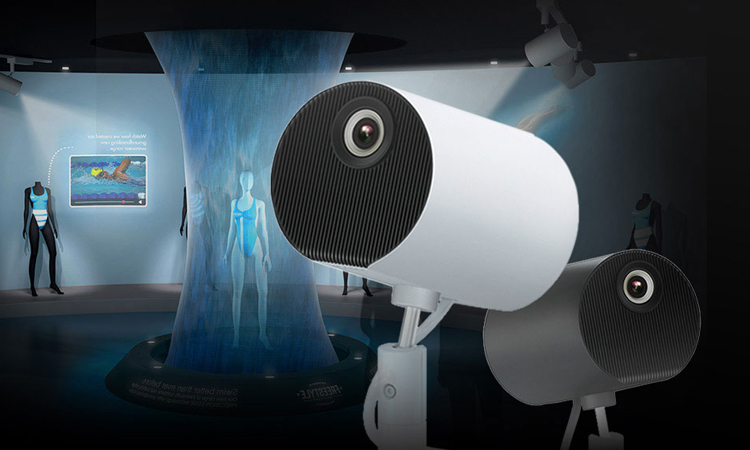
- In architectural and exhibition environments, Epson's LightScene projectors are often used, where projection and lighting become a unified visual language.
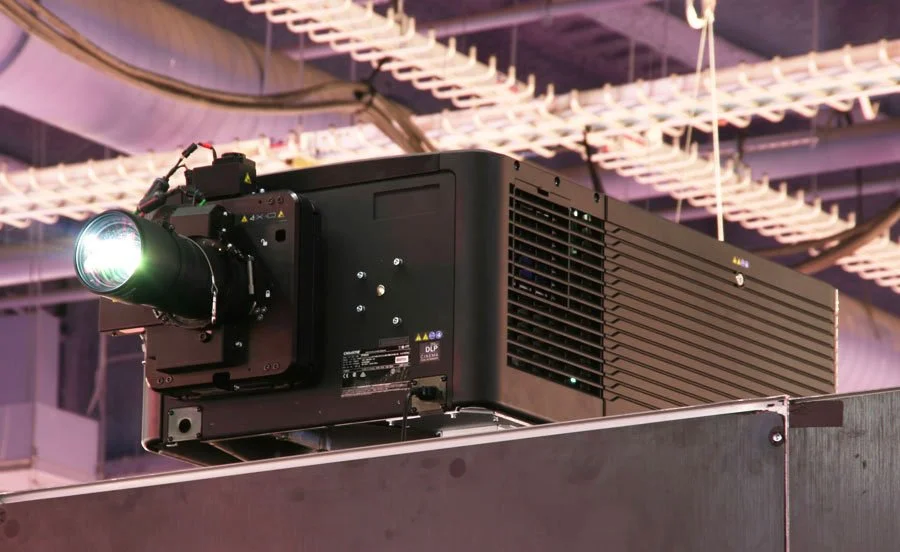
- In large-scale immersive spaces where high brightness, color accuracy, and detail are needed, Christie's laser projection systems are used.
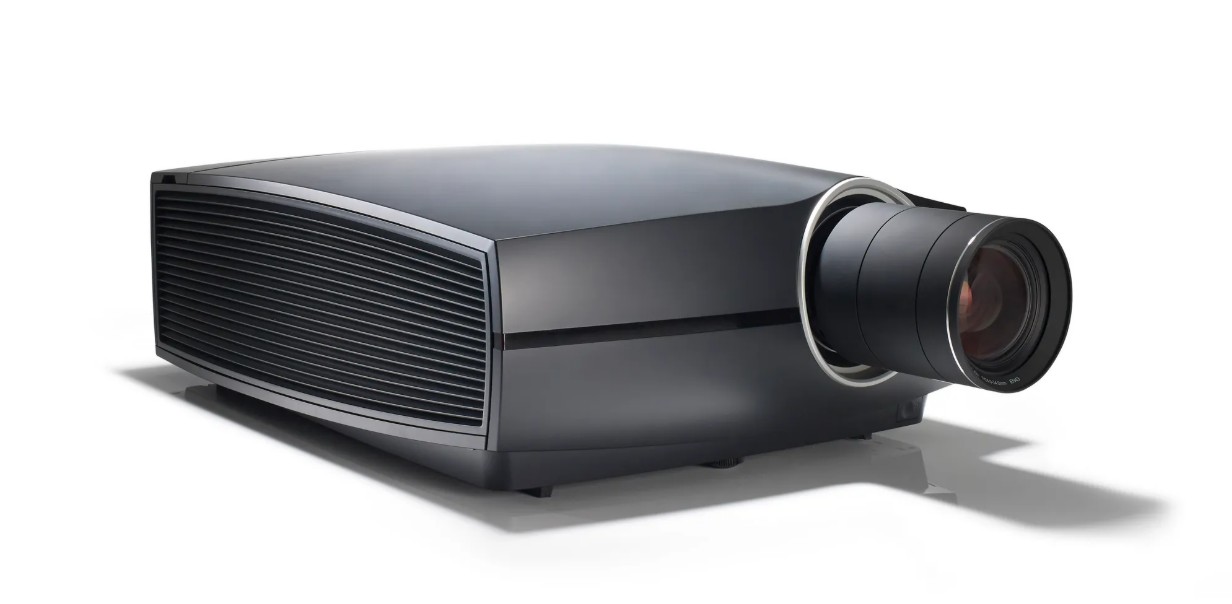
- In exhibition and interactive spaces where a person is effectively moving inside the content, Barco's Powerwall, CAVE, and Canvas systems are used.
What determines quality immersive projection?
1) The right projector
Immersive projection starts with correctly selected projectors, which depend on the space. Sometimes high detail is needed, sometimes strong lighting, or the correct projection distance. The surface is also important. On a white and smooth wall, the image is uniform, while on a textured or dark surface, a different class of projector and correct calibration are needed. In short: choosing the right model will save you from 'dark corners', uneven colors, and loss of detail.
2) Unity of imagery
When 2 or more projectors are working, the main task is for the viewer to perceive everything as one whole scene. This is where geometric image alignment, fitting to surface shapes, and 'hiding' transitions between projectors come in. If this part is not done precisely, the immersive effect loses its function.
3) Sound
Visuals can be ideal, but without the right sound, the video effect is lost. In a high-quality project, audio is not just background; rather, it controls emotion and direction: where the guest should pay attention, how the mood should change, how to 'follow' the scenario. Therefore, zoned sound, speech clarity, correct power (SPL), and synchronization with the content are important. When sound and imagery are in the same rhythm, the space truly comes alive.
When 360° immersive projection is planned correctly, it combines emotion, functionality, and results, which means more engagement and a relatively stronger impression. Today, when visual information is everywhere, attention is the most valuable resource.
360° immersive projection creates a space where a person stops, looks, feels, and remembers. It is a conscious choice for those who want different and effective communication.
How does Fresnel implement immersive projection projects?
At Fresnel, we design and integrate immersive projection solutions according to the specific space and task. Our team combines AV design, system integration, and calibration so that the immersive projection is as visible, stable, and precisely fitted to the surfaces as possible. Whether it is a corporate environment, entertainment, or public space, each project is planned with manageability and ease of operation in mind, with unified control and predictable performance.