Home Theater
We design home theater and media room systems, coordinating audio, video, acoustics, sound isolation, lighting, seating and control for the space and intended use.
Plan a ConsultationHome theater for your space and lifestyle
A home theater can be a fully dedicated hall or a media room created for daily use. In both cases, a quality result is achieved when the room, image, sound, lighting, and control are planned as a single project from the start.
Theater room
In a specially dedicated space, it is possible to have more precise lighting control, architecturally integrate screens and speakers, plan several rows, perform acoustic treatment, and reduce sound propagation into adjacent rooms.
Multi-functional media room
In a living room or family room, the system fits into the daily interior. With the help of a projector and motorized screen, large display, built-in speakers, and scene control, a single space can be used for movies, sports, music, and games.
Private screening and entertainment space
In a villa, apartment, or small private lounge, the project may include several viewer zones, centralized sources, professional control, and integration with other AV systems. Exact architecture is determined by space and usage scenarios.
Immersive Sound Experience
Home Theater Audio
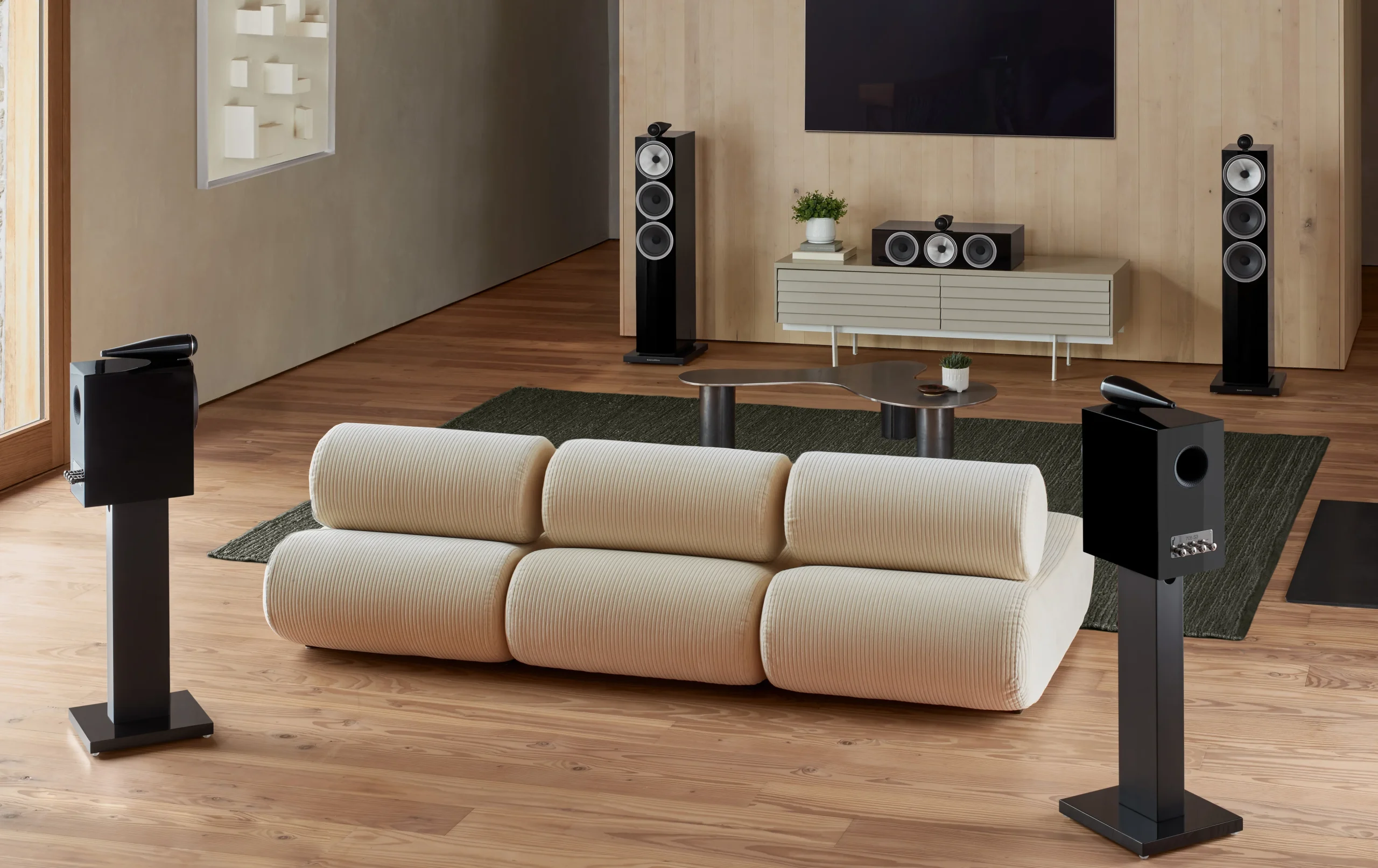
Home theater audio creates a realistic, immersive and cinematic audio environment for your space. We design and install premium Home Theater Audio systems for apartments, private houses, villas and commercial spaces. Systems based on Dolby Atmos and DTS:X technologies deliver clear dialogue, deep bass and the most realistic surround sound experience.
System Components and Planning
- Dolby Atmos and DTS:X system installation
- 5.1, 7.1 and 9.2 audio configurations
- AV Receiver selection and calibration
- In-wall, in-ceiling and concealed speaker installation
- Optimal subwoofer placement for low-frequency performance
- Acoustic testing and audio tuning
- Smart Home system integration
Projection and Large-Format Displays
Video Projection
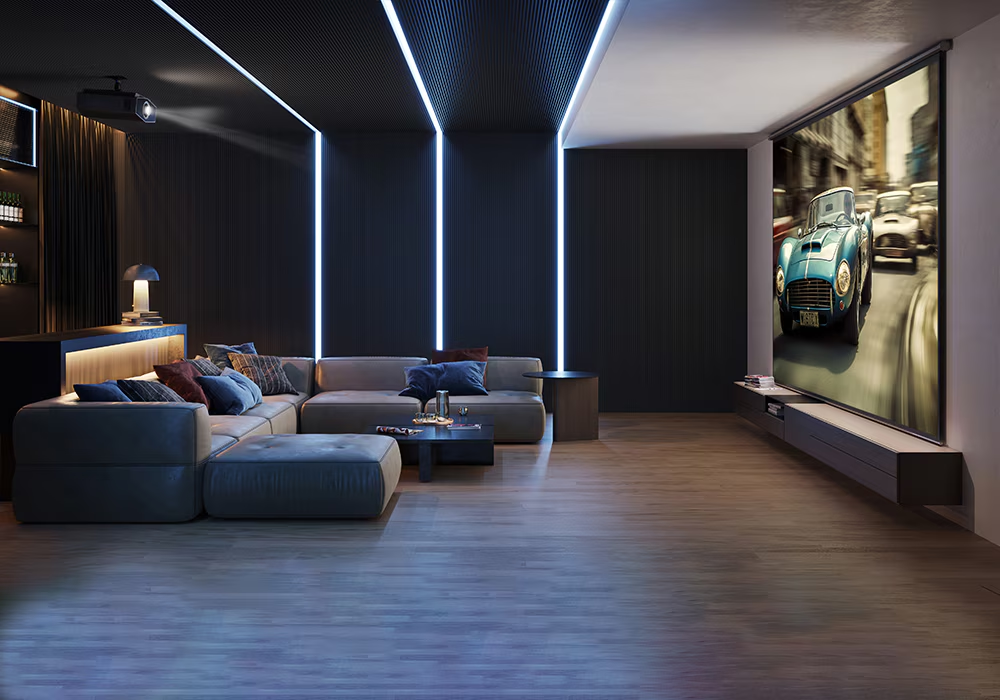
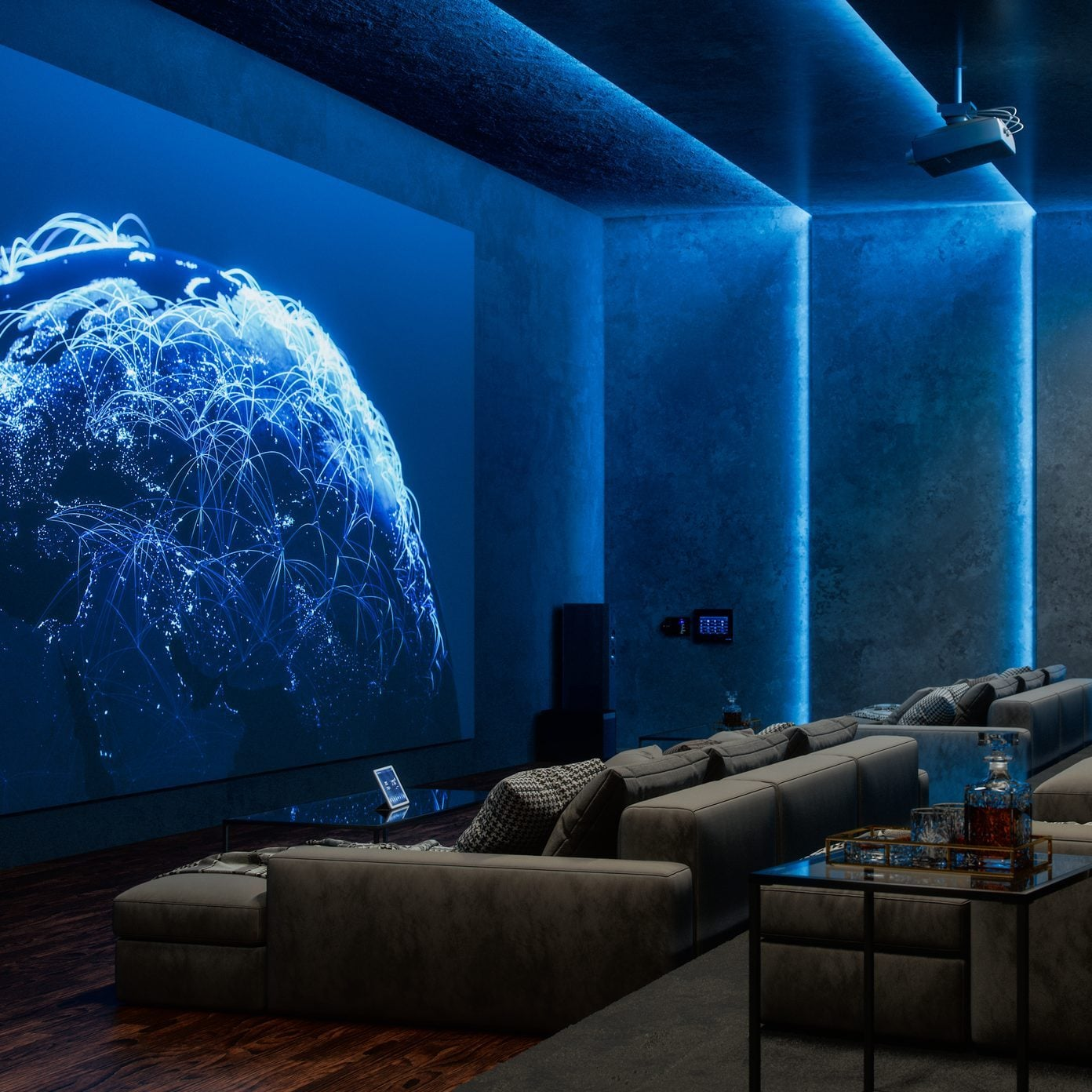
Projection or a large-format display is selected for viewing distance, screen size, room lighting, content and budget. Throw distance, optics, screen material and gain, calibrated brightness and maintenance access are considered together.
System Components and Planning
- Projectors or large-format displays selected for the project
- Throw distance and lens checked for the installation
- Fixed and motorised screens
- OLED, Mini-LED and MicroLED display integration
- Supported HDR formats verified for the selected devices
- 4K/120 Hz, VRR and eARC checked across the entire signal chain where required
Perfect Atmosphere at a Touch
Smart Lighting
Smart lighting in a cinema space creates a comfortable, refined and fully controllable environment. A properly planned lighting system enhances the visual experience and gives every film a true cinematic atmosphere. Light scenes, automatic dimming and integrated smart home control ensure maximum comfort and effortless management.
System Components and Planning
- Bias Lighting for behind-screen illumination
- Integrated LED lighting systems
- Scene-based automatic control
- Exit and step lighting
- RGBW atmospheric lighting
- Integration with Crestron, Control4 and Smart Home systems
Comfort & Aesthetics
Theater Seating
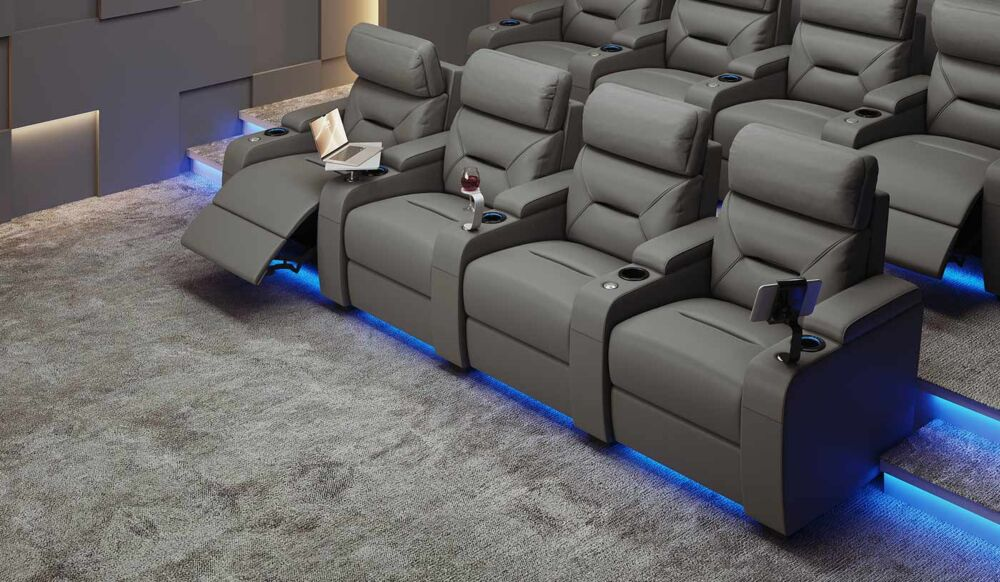
Home theater seating is an important part of the space's comfort and visual experience. A properly chosen seating system combines comfort, functionality and contemporary design in one perfect environment. Premium cinema seats are ideal for Home Theater spaces, media rooms and private lounge interiors.
System Components and Planning
- Electric recliner seats
- Modular seating systems
- Cup holders and integrated tables
- LED lighting in seating zones
- VIP configurations and row systems
- Individual colour, leather and fabric selection
Professional Acoustic Design
Acoustics
The ideal cinema sound starts with the right acoustics. Acoustic treatment of the space improves sound clarity, reduces echo and creates a more realistic and balanced audio environment. Professionally planned Acoustic Treatment is especially important for home theater systems, music spaces and premium interiors where every detail matters.
System Components and Planning
- Acoustic panel installation
- Bass Trap systems for low-frequency control
- Wall and ceiling acoustic solutions
- Individual acoustic design
- Room measurements against agreed acoustic criteria
- Audio tuning and system optimisation
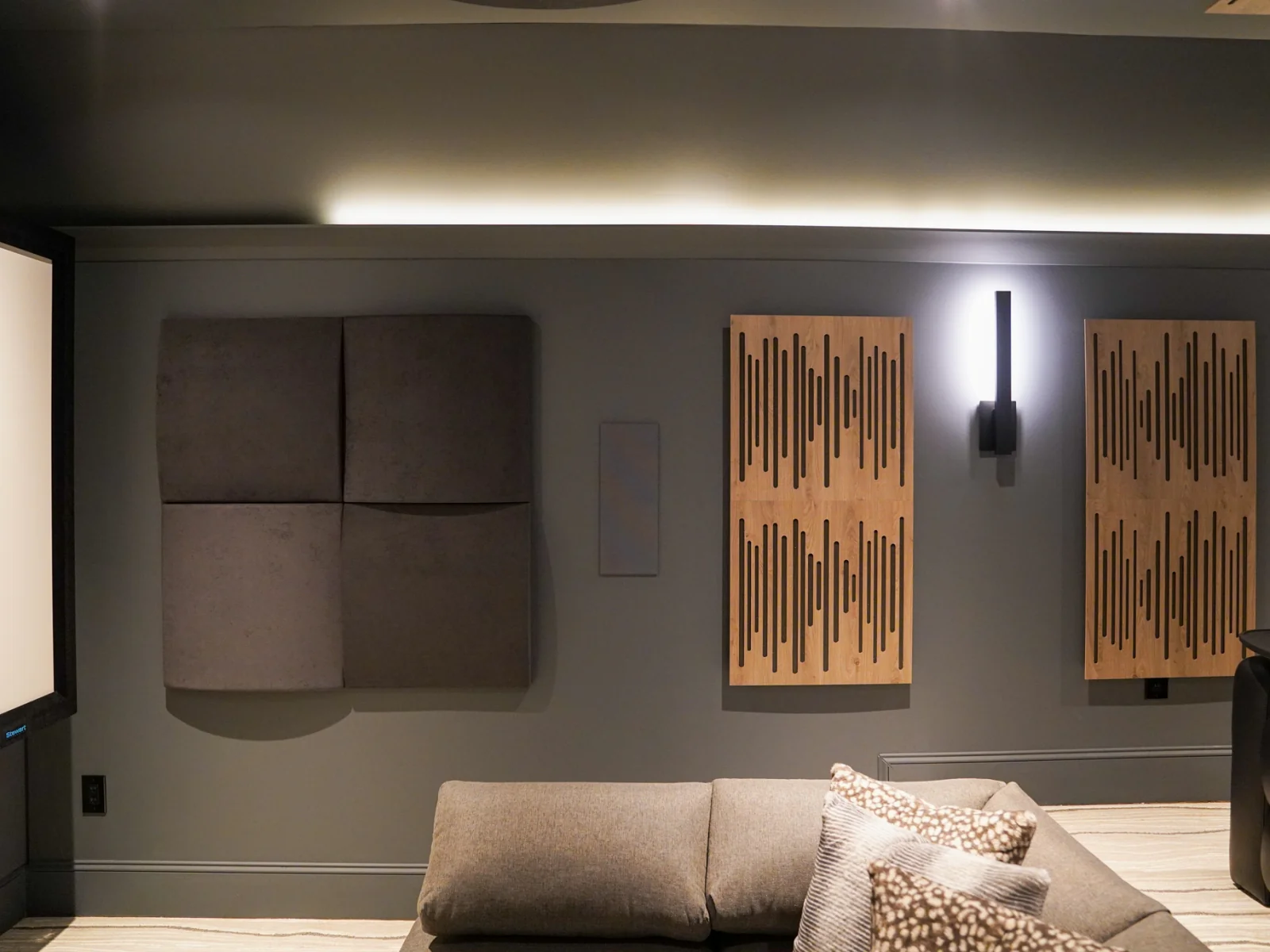
Controlled Acoustic Environment
Soundproofing
Sound isolation aims to reduce sound transmission to neighboring rooms and control incoming noise. Results depend on walls, ceiling, floor, doors, ventilation, penetrations and junctions; acoustic treatment inside the room does not replace construction-level isolation.
System Components and Planning
- Room-within-a-room construction
- Vibro-isolation mounts and systems
- Wall, ceiling and floor isolation
- Isolation performance checked for the complete construction and applicable test method
- Acoustic doors and panels
- Ventilation system silencers
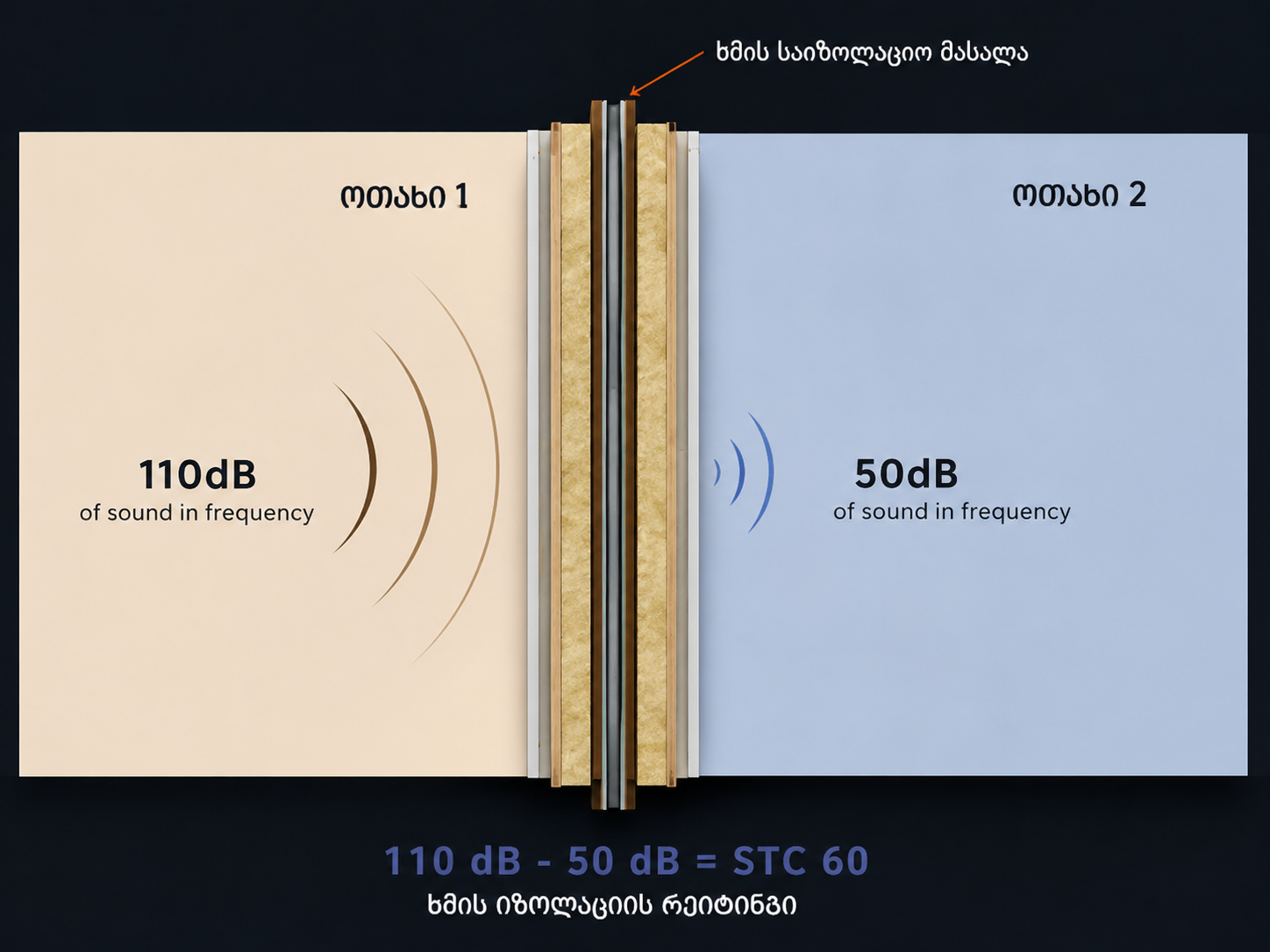
Infrastructure, ventilation, and device placement
Invisible infrastructure that keeps the system running reliably
The home cinema experience is also affected by parts that are not visible in the interior. Power supply, low-voltage cables, network, equipment rack, cooling, projector airflow, and service access must be planned before construction and renovation work.
Cabling and network infrastructure
We determine the routes for audio, video, control, and network cables, conduit runs, termination points, and labeling. Long video line technology is selected based on length, bandwidth, and service requirements. Wi-Fi may be part of the user interface, but for critical devices, a wired network often creates a more predictable foundation.
Equipment rack and cooling
AV receivers, amplifiers, processors, sources, and network equipment need sufficient space, airflow, power supply, and service access. Cooling for the rack and projector should be calculated according to the heat dissipated and manufacturer requirements so that ventilation noise does not interfere with the listening environment.
Power supply and protection
Power circuits, loads, grounding, surge protection, and the need for an uninterruptible power supply are coordinated with the electrical project. A UPS or power conditioner does not automatically solve all electrical problems; the device is selected based on the specific load and protection goal.
Design and implementation process
How we create a home cinema
Consultation and technical requirements
We clarify the room's purpose, number of viewers, content types, interior priorities, desired control, budget range, and work deadlines. If architectural plans exist, we process them at the initial stage.
Space evaluation and concept
We measure the room, evaluate constructions, sightlines, ambient light, noise sources, cable routes, and device placement. We determine the project's primary architecture and alternatives.
Engineering design and specification
We prepare the layout for the screen, speakers, subwoofers, seating, lighting, rack, and cables. We specify devices, compatibility, electrical and ventilation requirements, interfaces, and construction details.
Installation and Programming
In coordination with the construction team, we perform cabling work, equipment installation, termination, network configuration, and programming of control scenarios. Hidden works are checked before finishing.
Calibration, testing, and handover
We check all signal sources, audio channels, video formats, control scenarios, and safe shutdown. We conduct separate calibrations for audio and image, fix the main parameters, and instruct the user.
Service and system upgrades
Support after cinema handover
For reliable system operation, it is important to monitor software updates, check filters and ventilation, maintain the projector and screen, diagnose cables and connectors, and perform recalibration if necessary. The service plan depends on the devices, usage intensity, and environmental conditions.
If a new source, gaming console, display, or audio channel is added in the future, the compatibility of the existing AV receiver, processor, amplifiers, cables, and control system is checked first. This way, upgrades are planned in advance without damaging the already tuned system.
Frequently asked questions about home cinema
There is no universal minimum area. A project can be adapted to a compact media room or a multi-row dedicated cinema. When evaluating, it is important to consider the room's length, width, height, number of viewers, screen size, speaker spacing, and walkways.
The choice depends on the desired diagonal, room lighting, HDR priority, installation conditions, and budget. A projector often provides a larger image, while a large-format display works more easily in a lit media room. The final choice must be evaluated in the space.
Screen size is determined by viewing distance, viewing angle, image resolution, content type, projector capability, and user comfort. Just having the free wall size is not a sufficient criterion.
The first number denotes the main channels placed at the listener level, the second denotes the subwoofer channel, and the third denotes the ceiling or height channels. For example, a 5.1.2 configuration has five main channels, one low-frequency effects channel, and two height channels. In practice, the physical number of subwoofers may be more than one.
The quantity depends on the room size, geometry, number of listening spots, and the target result. Multiple subwoofers are sometimes used for more even bass distribution, but the result requires setting up the correct location, level, delay, and filtering.
Usually, no. Room acoustic panels control reflections and reverberation inside. To reduce sound transmission to neighboring rooms, complex isolation of partitions, doors, openings, ventilation, and flanking paths is required.
In many cases it is possible, although hidden cables, acoustic treatment, isolation, and ventilation create more constraints in a finished interior. Getting involved at an early stage increases options and reduces the risk of rework.
Local sources and core AV functions may work without the internet, but streaming, app updates, remote support, and some control functions require a stable network. The exact dependency depends on the selected devices.
Audio calibration includes channel levels, delay, direction, crossover frequencies, subwoofers, and room correction. Video calibration concerns image mode, brightness, contrast, color, white balance, and corresponding signal parameters. Both are necessary but use different measuring devices and processes.
The deadline depends on the room's readiness, the volume of construction and acoustic work, equipment delivery, programming, and calibration. An exact schedule is set after agreeing on the technical requirements and project stages.
Yes. Service can include consultation, space evaluation, engineering design, equipment supply, installation, programming, audio and video calibration, user instruction, and agreed-upon subsequent support.
Plan Your Home Theater
Send us your room plan or dimensions, photos, audience size, preferred screen size and intended use. We will help plan audio, video, acoustics, lighting, control and installation together.