Back to Technologies

Stage Machinery & Professional Stage Technology

Fresnel designs stage machinery systems for theatres, concert and cultural halls, multipurpose venues and event spaces. A solution may include lifting and suspension systems, trusses, moving platforms, turntables, curtains, soffits, catwalks and retractable seating.

Each system is developed around the venue architecture, working loads, movement sequences, operator workflow, maintenance access and safety requirements applicable to the project. Capacity, speed, dimensions and classification are confirmed by the selected equipment documentation and engineering design.

Stage technology for different venue types

The stage machinery architecture varies with performance format, stage dimensions, venue use, working height and day-to-day operation.

Theatres and opera houses

Upper and lower stage machinery, scenery and curtain movement, stage transformations and operator controls, defined by the repertoire and technical brief.

Concert and cultural halls

Safe suspension for lighting, audio and scenery, with soffits, curtains and the infrastructure needed for maintenance.

Multipurpose venues

Moving platforms, retractable seating and defined operating modes that support different room configurations.

Event and corporate spaces

Permanent or temporary rigging, truss, screen, lighting and curtain solutions selected for project loads and use conditions.

Stage machinery, rigging and transforming systems

Stage machinery and control systems

The control system coordinates machinery movement, position monitoring, operator commands and project-defined safety functions. Its architecture is selected according to the number of mechanisms, movement type, loads, speed, synchronization and operational risks.

The console, sensors, brakes, limits, emergency stop and feedback should be considered as one system. Safety functions and required performance levels are determined through risk assessment and verified through project documentation and testing.

  • Manual, semi-automatic or computer-based control as appropriate;
  • Position, speed and direction monitoring;
  • Coordinated movement sequences across mechanisms;
  • Operator permissions, interlocks and emergency stop;
  • Event logging and diagnostics where supported by the selected system;
  • Sequence setup, testing and operator training.
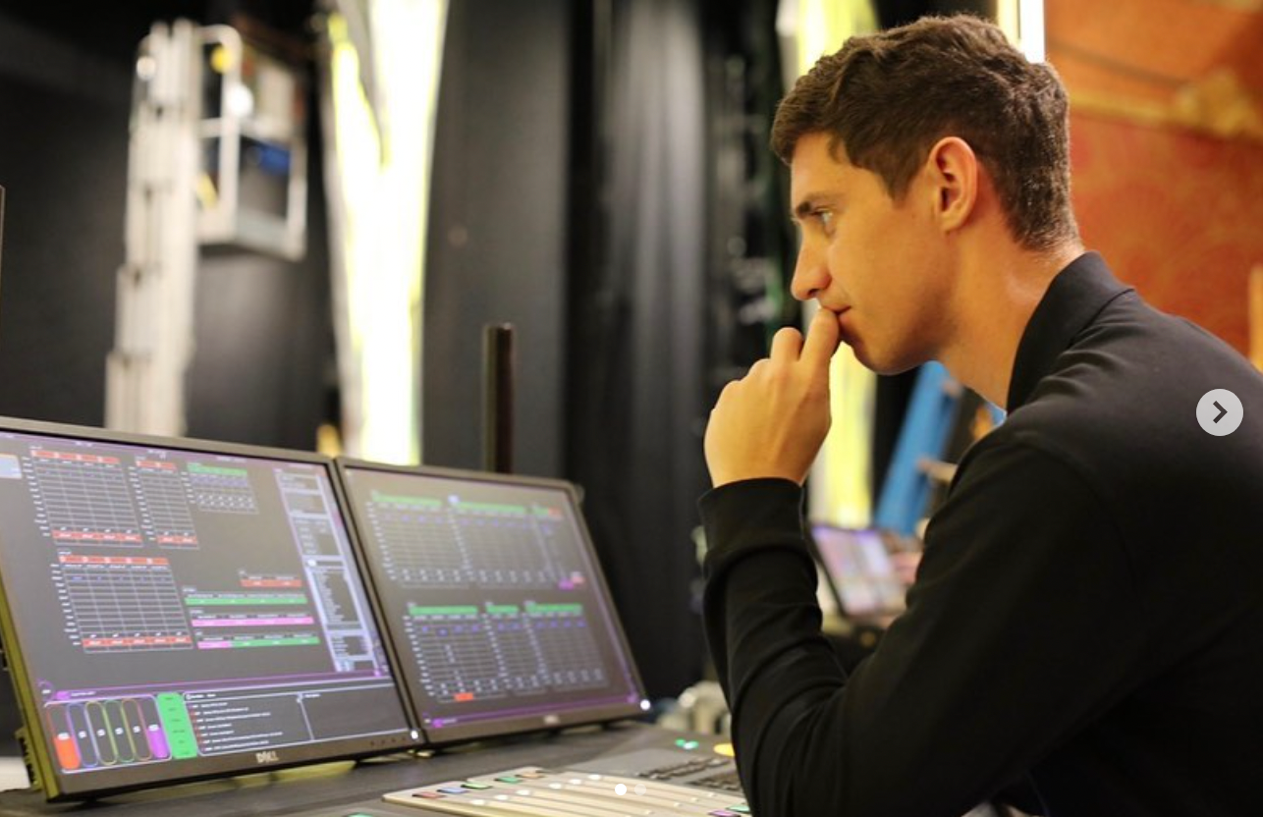
Stage machinery control and automation system

Winches and lifting systems

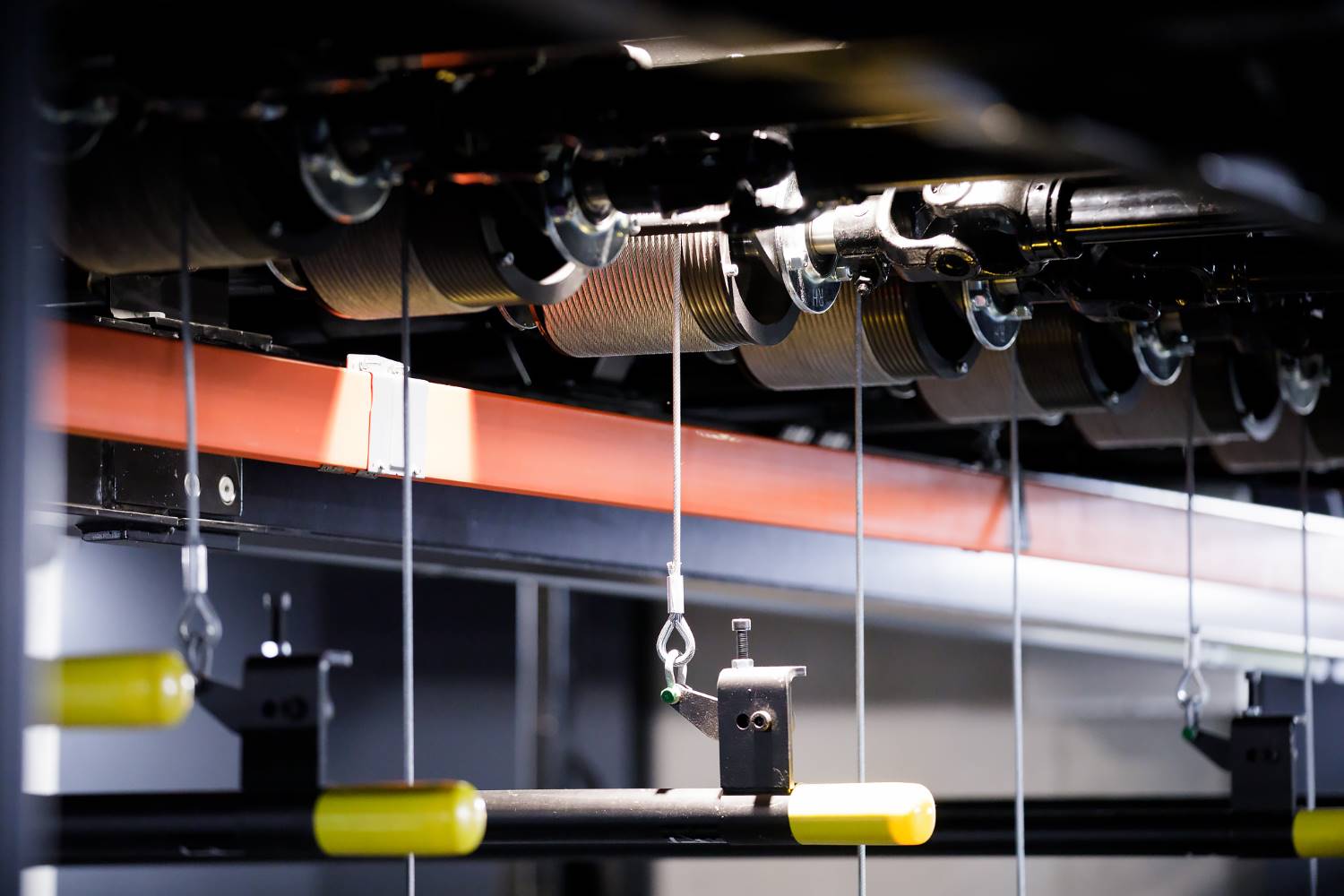
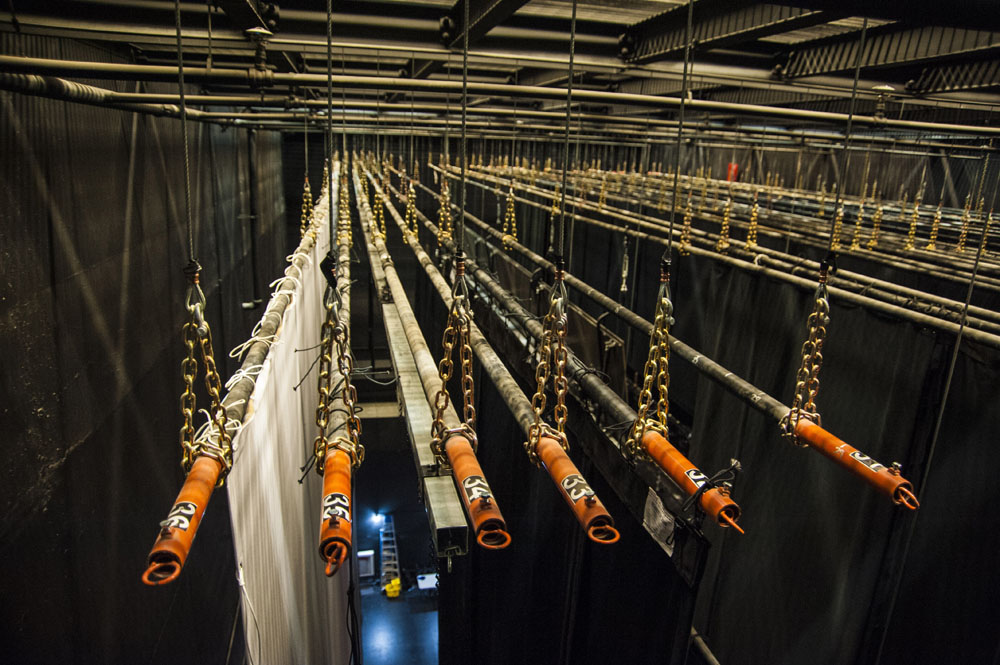
Winches and lifting systems move or suspend lighting soffits, curtains, scenery, screens and other stage elements. Selection considers working load, travel, speed, duty cycle, suspension points, work beneath the load and maintenance access.

The hoist, wire rope or chain, drum, brake, gearbox, limits, load monitoring and supporting structure form one system. No component’s individual rated value should be treated as the permissible system load without engineering review.

  • Wire-rope winches and compatible blocks;
  • Electric chain hoists selected for the application;
  • Fixed- or variable-speed drives;
  • Position and load monitoring where required;
  • Mechanical and electrical limits for the selected architecture;
  • Installation, load testing and documented handover.
Stage winch and lifting equipment

Trusses and suspension structures

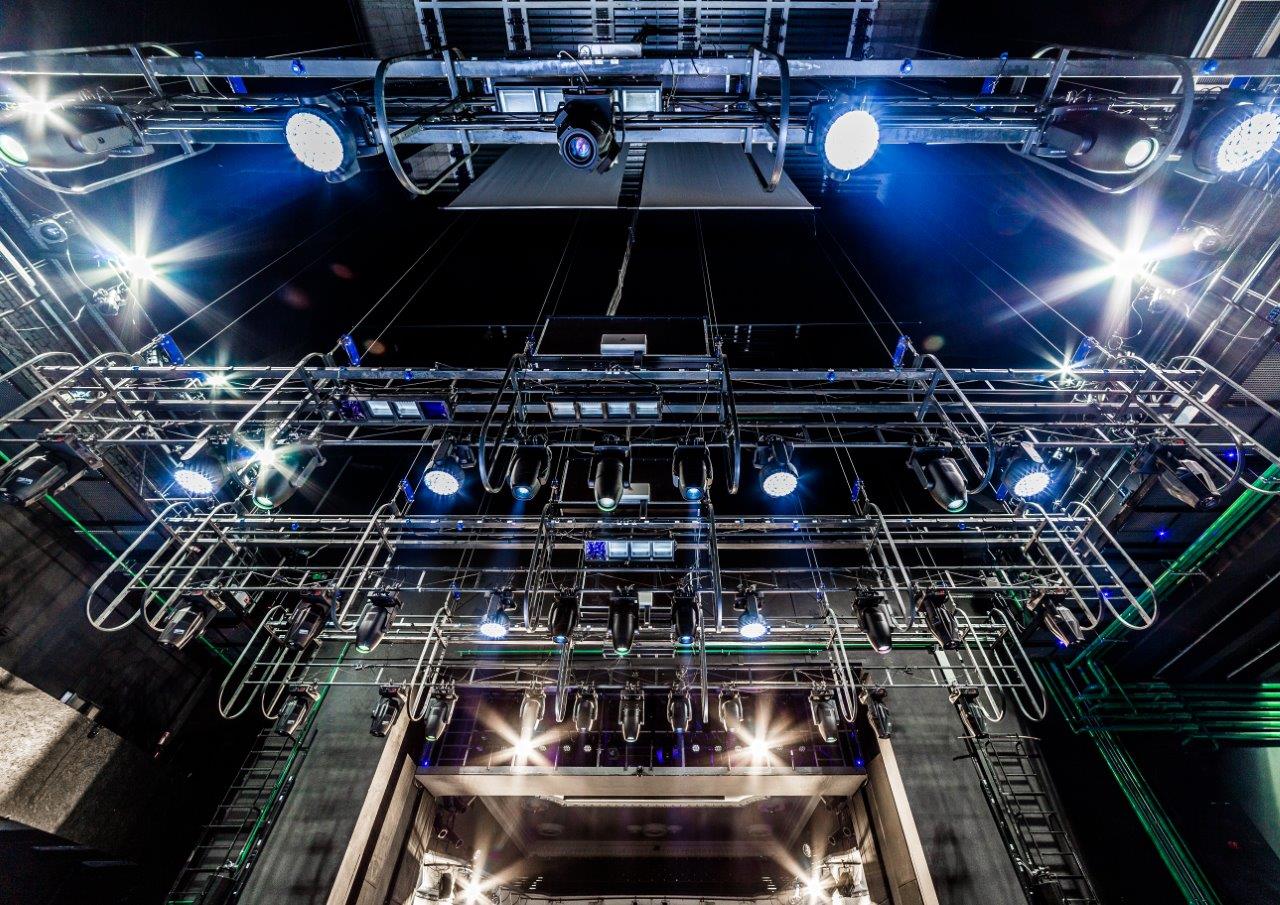
Aluminium or steel trusses provide infrastructure for suspending lighting, audio, video and scenery. System safety depends not only on the truss model but also on configuration, spans and supports, connections, suspension points and the location of each load.

We develop load plans and coordinate trusses with the building’s load-bearing structure. Permissible loads are checked against manufacturer tables or an appropriate engineering calculation for the exact configuration used in the project.

  • Straight, corner and special truss modules;
  • Coordination of suspension points and support structures;
  • Placement of lighting, audio and video loads;
  • Cable management and power-distribution routes;
  • Secondary safety devices appropriate to the equipment;
  • Installation drawings, identification and inspection requirements.
Stage truss and suspended technical equipment

Turntables and moving platforms

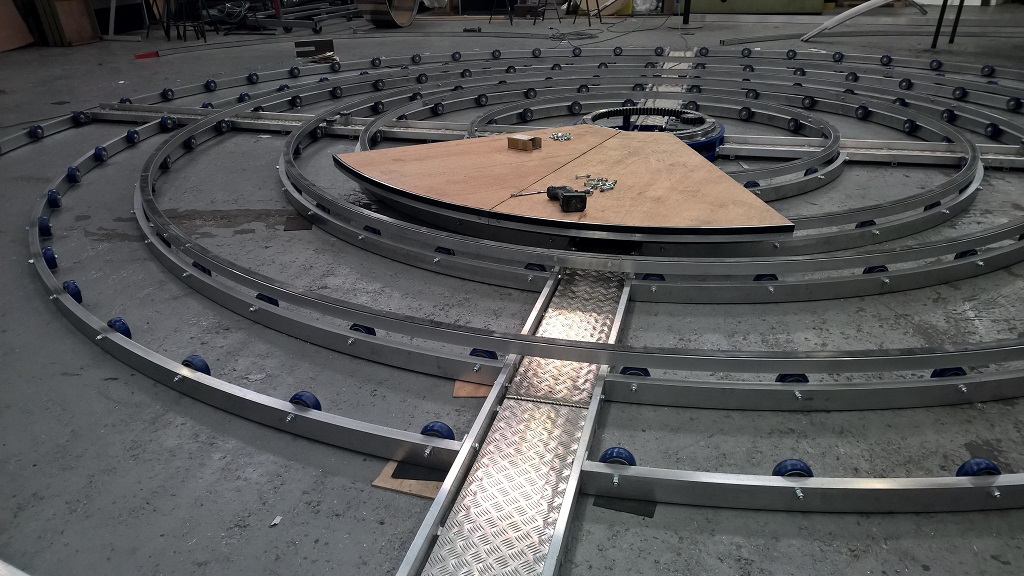
Turntables and moving platforms support dynamic scenery and rapid scene changes. A system may be permanent or modular and operated manually, from a local control or through central automation when the project architecture allows.

Diameter, capacity, speed, acceleration, stopping accuracy, noise and cable-transfer method are defined for the intended use. Edge protection, access zones, emergency stop and safe maintenance access are particularly important.

  • Turntable with one or more sections;
  • Rising or lowering stage platforms;
  • Coordinated speed and position control;
  • Cable or data transfer solution where needed;
  • Safety sensors, barriers and interlocks;
  • Surface finish and level transition to adjacent stage flooring.
Rotating stage platform

Soffits, grids and technical catwalks

Soffits, grids, catwalks and technical bridges support the placement and maintenance of lighting, audio and other stage equipment. Their layout should work with sightlines, equipment positions, work routes and the building’s load-bearing structure.

Structural loads, guardrails, flooring, access, fall protection and evacuation conditions are determined by project requirements. Safe maintenance access should be addressed during the architectural design stage.

  • Fixed or liftable lighting soffits;
  • Technical grids and suspension points;
  • Catwalks, galleries and service bridges;
  • Cable, power and signal routes;
  • Guardrails, work lighting and fall-protection anchors;
  • Coordination with audiovisual and engineering designs.
Stage grid and technical catwalk

Stage curtains and curtain machinery

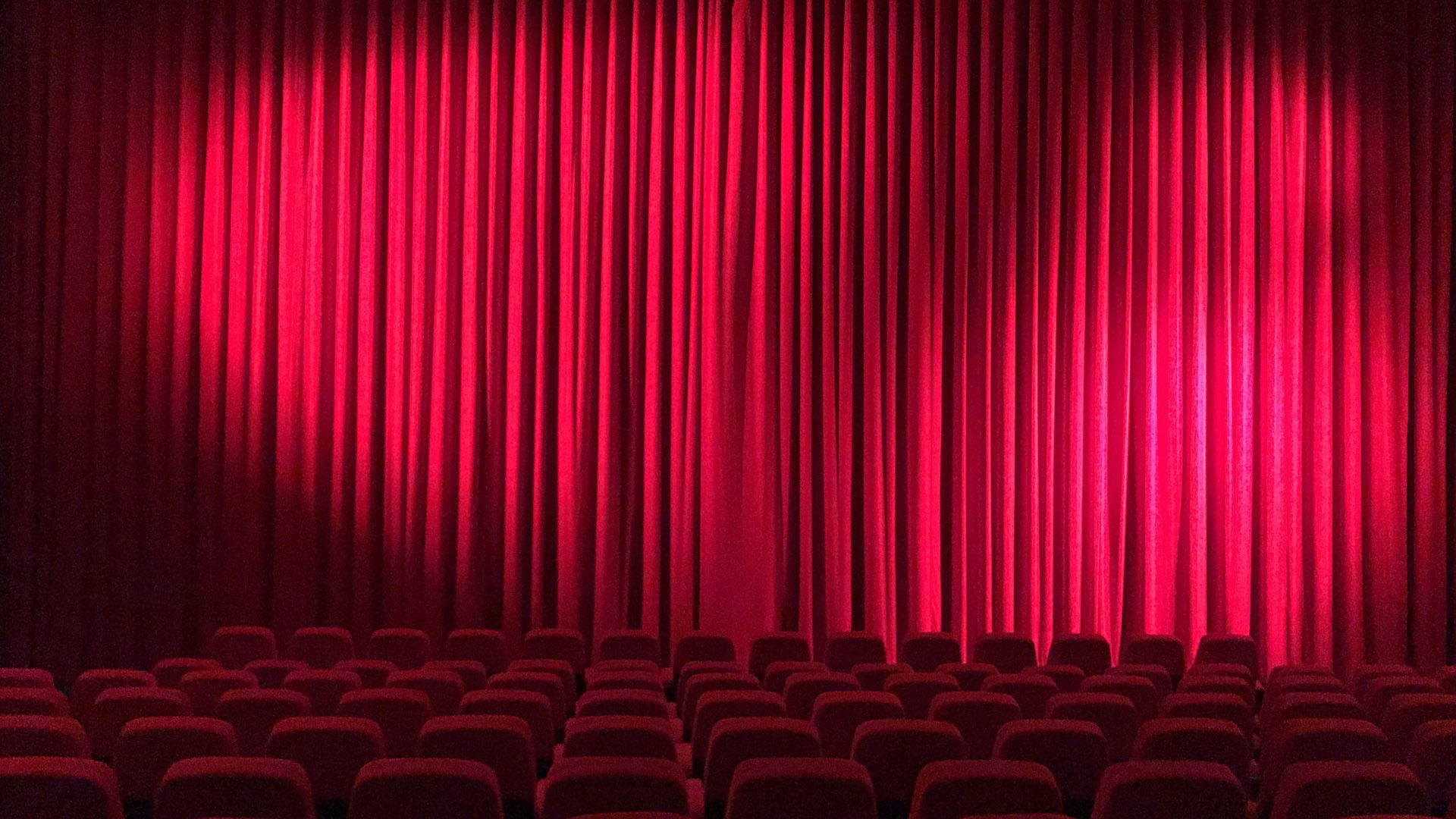
A stage curtain system may include a main curtain, legs, borders, rear curtain, cyclorama and associated tracks. Fabric is selected for the visual brief, weight, light transmission, acoustic properties, care and project requirements.

Curtain machinery is planned for opening direction, travel, speed, load, control and emergency operation. A safety fire curtain is a separate specialist system and should not be treated as a decorative main curtain.

  • Straight, overlapping or flying curtain configurations;
  • Manual or motorised tracks as required;
  • Legs, borders, rear curtains and cycloramas;
  • Fabric weight, fullness and bottom weighting;
  • Current test documentation for reaction-to-fire classification;
  • Coordinated selection of rigging, track, motor and controls.
Stage curtain system

Retractable seating systems

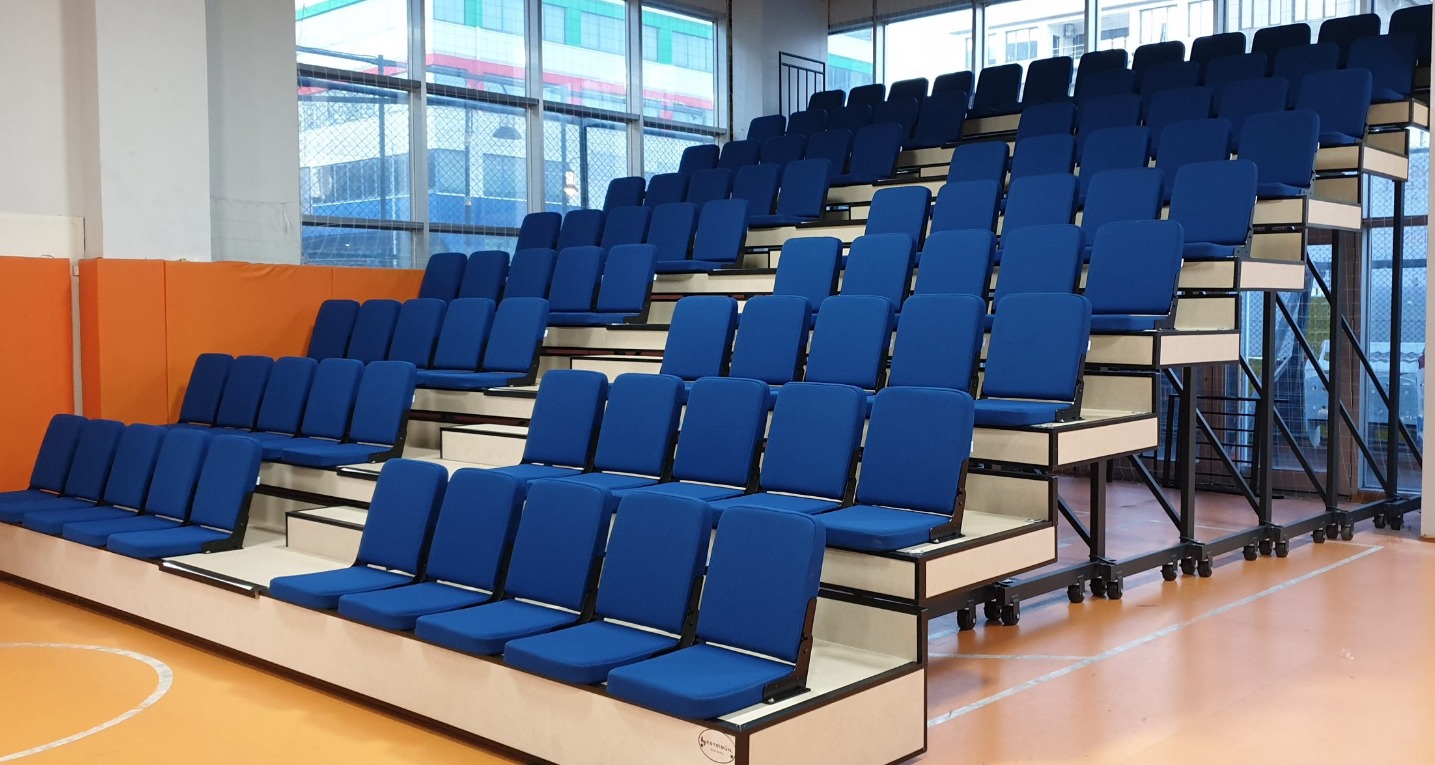
Telescopic and retractable seating can convert a multipurpose hall into a flat floor or audience tribune. Configuration depends on seat count, row geometry, sightlines, floor capacity, aisles and storage space.

Opening and closing may be manual, assisted by a drive, or motorised depending on the model. Seat dimensions, guardrails, steps, accessible positions, evacuation aisles and loads must be coordinated with the architectural and safety designs.

  • Fixed or telescopic tribune configurations;
  • Seat and row planning with sightlines in mind;
  • Manual or motorised deployment and retraction;
  • Steps, guardrails and aisle lighting as required;
  • Coordination of accessible positions and routes;
  • Installation, trial operation and staff instruction.
Retractable telescopic tribune seating

Safety and engineering responsibility

Stage machinery moves or holds substantial loads near working and audience areas. Safety therefore cannot be established by an equipment certificate alone. It requires system-level risk assessment, coordination with the load-bearing structure, control safety functions, correct installation, testing and documented operating procedures.

Applicable legislation, standards, the inspecting party and handover requirements are identified at project outset. References to EN 17206, DGUV or ANSI/ESTA documents apply only when they form part of the agreed regulatory basis for the specific project.

  • Define working and dynamic loads;
  • Assess risks and specify safety functions;
  • Document coordination with the building’s load-bearing structure;
  • Agree factory and on-site test programmes;
  • Load testing, acceptance and operating documentation;
  • Operator training and periodic inspection planning.

How a stage technology project is delivered

Project stages

A stage technology project requires coordination across architecture, structure, electrical services, lighting, audio and stage operations.

  1. 01

    Technical brief and venue review

    We establish use scenarios, moving elements, loads, working heights, operator workflow, storage and maintenance requirements.

  2. 02

    Concept and engineering design

    We select the machinery principle and define movement diagrams, loads, suspension and support points, control architecture and safety requirements.

  3. 03

    Detailed coordination

    We coordinate structures, electrical supply, cable routes, AV and lighting positions, architectural details and maintenance access.

  4. 04

    Fabrication and installation

    We prepare or supply agreed components, install to the project design and check connections, alignment and work areas.

  5. 05

    Programming, testing and handover

    We configure movement sequences, check limits and safety functions, conduct agreed tests and provide operator instructions and project documentation.

Inspection and maintenance

Stage machinery needs planned inspection because ropes, chains, brakes, gearboxes, tracks, fixings, sensors and electrical components are subject to wear. Service intervals depend on manufacturer instructions, use intensity, environment and applicable project requirements.

Maintenance may include visual and functional inspection, lubrication, adjustment, safety-function testing, load testing, replacement of damaged components and log updates. Inspections required by law or regulation must be performed by a suitably qualified person or organisation.

Technology that supports stage operations

A well-planned stage system gives technical teams clear control, safe maintenance access and flexibility suited to the performance format. Machinery, automation, structures and operating procedures need to work together as one project.

Fresnel develops solutions around the venue, loads, stage workflow and agreed safety criteria, from concept through installation, testing and handover.

Frequently asked questions about stage technology

It may include lifting and suspension mechanisms, soffits, trusses, moving platforms, a turntable, curtain systems, technical catwalks, controls, safety functions and related infrastructure. The technical brief defines the exact scope.

Capacity is determined by the moving load, attachments and cables, movement dynamics, suspension arrangement, safety requirements and the supporting structure’s capability. The motor or hoist rating alone is not enough.

A working load limit is the maximum load specified by the manufacturer or project for a particular component and use condition. The system’s weakest element, configuration and dynamic forces all affect the permissible overall load.

Only when every load, its position, cables, lifting points and dynamic effects have been calculated for the specific truss and configuration. A general manufacturer rating does not automatically permit every load arrangement.

A decorative stage curtain serves a stage and visual function and may need fabric with a specified reaction-to-fire classification. A fire safety curtain is a specialist system requiring separate design, classification, controls and testing.

No. A simple system may be operated manually or from a local control. Computerised control is appropriate when coordinated axes, precise position control, sequences, permission management or advanced diagnostics are needed.

The required diameter, load, movement speed, stopping accuracy, rotation angle, surface finish, cable-transfer needs, noise requirements and safety zones are needed.

We consider dimensions, fabric weight, fullness, opacity, colour, acoustic requirements, track type, direction of travel and any required reaction-to-fire classification.

Intervals depend on manufacturer instructions, frequency of use, system type, environment and applicable regulations. Daily operator checks, periodic maintenance and formal inspection by a competent person are distinct activities.

Yes. Services may include consultation, technical briefing, design and coordination, equipment supply, installation, programming, testing, training and agreed follow-up support.

Plan your stage technology solution

Send us the stage and auditorium plans, intended-use scenarios, descriptions of moving elements and target schedule. Our team can help define the machinery, suspension structures, controls, safety and implementation stages.